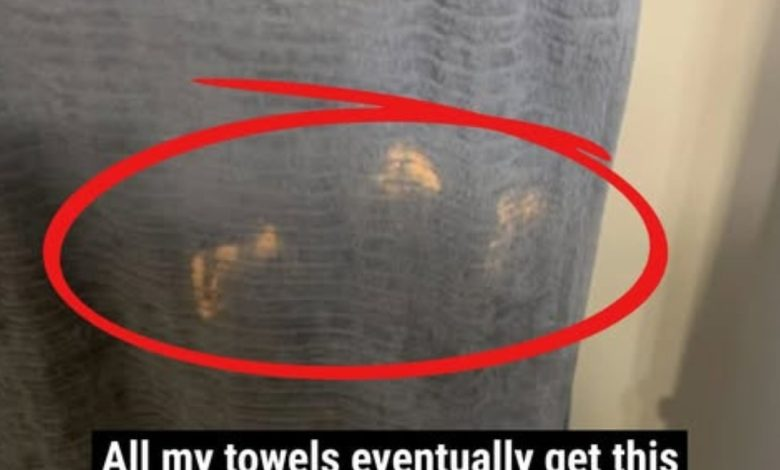
* Orange stains on laundry, especially white fabrics
* A metallic taste in drinking water
* Orange or brown buildup in sinks, toilets, and bathtubs
* Water that appears reddish or brown when freshly drawn
If these signs are familiar, it’s likely your orange towel stains are caused by iron.
## The Role of Detergents
Even high-quality detergents can struggle to remove rust stains. In fact, certain detergents may **worsen the problem** if they don’t contain a rust-fighting agent.
* Standard laundry detergents focus on oils, dirt, and common stains—not mineral deposits.
* If your washing machine has old water lines with rust, detergent alone may not prevent the formation of orange stains.
* Bleach, surprisingly, is not always effective against iron stains; chlorine bleach can react with iron to create **orange deposits that are harder to remove**.
—
## Fabric Type Matters
Not all towels react the same way to iron in water.
* **Cotton towels** are highly absorbent and tend to trap minerals, making stains more noticeable.
* **Synthetic blends** may resist staining slightly better, but they are less absorbent and can feel rougher after repeated washing.
* **Dark towels** may hide orange stains better than whites or light colors, but the rust still builds up over time.
—
While iron in water is the most common culprit, other factors can contribute to stubborn orange stains:
### 1. Hard Water
* Hard water contains high levels of **calcium and magnesium**, which can react with iron to make stains worse.
* Minerals can create a crusty film on fibers, making stains harder to remove.
### 2. Old Washing Machines
* Rust can accumulate inside pipes, the drum, or the detergent dispenser.
* Washing towels in a machine with rusty parts can directly transfer rust to your laundry.
### 3. Environmental Factors
* Tap water with manganese, copper, or other metals can leave orange, brown, or even bluish stains.
* Iron-rich soil and dust may also cling to towels during line drying outside.
* Towels left damp for long periods can allow rust particles to oxidize and darken further.
* Poor ventilation or stacking damp towels can make discoloration more pronounced.
—
## How to Prevent Orange Stains
Fortunately, there are several strategies to prevent towels from developing orange stains.
### 1. Test Your Water
* Consider having your water tested for iron, manganese, and hardness.
* If iron levels are high, installing a **water softener** or **iron filter** can make a huge difference.
### 2. Use the Right Detergent
* Choose detergents formulated for **hard water**.
* Some detergents contain **rust-fighting agents** designed to bind iron before it stains fabric.
### 3. Wash Towels Properly
* Avoid overloading the washing machine; towels need room to move freely.
* Use warm or hot water (if safe for the fabric) to help dissolve minerals.
* Add a rust-removing product, such as **sodium metabisulfite** or commercial laundry rust removers, occasionally to prevent buildup.
### 4. Clean Your Washing Machine
* Inspect for rust or buildup inside the drum or pipes.
* Run a **maintenance cycle with vinegar or specialized washing machine cleaners** to remove deposits.
### 5. Rinse Thoroughly
* Minerals can remain if towels aren’t rinsed properly.
* An extra rinse cycle can flush out residual iron particles.
### 6. Avoid Chlorine Bleach for Rust
* Chlorine can react with iron and worsen orange staining.
* Oxygen-based bleach or rust-removing agents are safer alternatives for white towels.
### 7. Dry Towels Correctly
* Line dry in direct sunlight when possible; UV rays can help reduce discoloration.
* Avoid leaving towels damp in a pile for long periods.
—
## How to Remove Existing Orange Stains
Once orange stains have appeared, removing them can be challenging but not impossible.
### 1. Use White Vinegar
* Soak stained towels in a solution of **1 cup white vinegar per gallon of warm water** for 1–2 hours.
* Wash as usual afterward. Vinegar helps break down mineral buildup and loosen rust particles.
### 2. Lemon Juice and Sunlight
* Apply lemon juice to stains and lay towels in direct sunlight for several hours.
* The combination of citric acid and UV light can naturally bleach stains.
### 3. Commercial Rust Removers
* Products specifically designed for rust stains can be applied safely to fabric.
* Follow instructions carefully to avoid damaging towels.
### 4. Oxygen-Based Bleach
* Soak towels in warm water with **oxygen bleach** for several hours.
* This can lift mineral stains without the harsh effects of chlorine bleach.
### 5. Prevention After Removal
* Even after removing stains, ensure that water filters, washing machine cleaning, and proper laundry habits are in place to prevent recurrence.
—
## When It’s Time to Replace Towels
Despite your best efforts, some towels may develop stains that are impossible to remove. Over time:
* Mineral deposits become embedded in fibers.
* Fabric may begin to weaken or feel rough.
* Persistent discoloration can affect aesthetics and hygiene perception.
In these cases, replacing the towels is the best option—especially if they are older or low-quality.
—
## Key Takeaways
Orange stains on towels are usually not a reflection of poor quality, dirtiness, or user error. Instead, they often result from a combination of **iron in water, mineral buildup, washing habits, and fabric characteristics**.
To summarize:
1. **Test your water** for iron and hardness; filters may help.
2. **Use detergents formulated for mineral-rich water** and avoid chlorine bleach for rust stains.
3. **Maintain your washing machine** to prevent rust transfer.
4. **Use vinegar, lemon juice, or oxygen bleach** to remove existing stains.
5. **Dry towels properly** and avoid leaving them damp to prevent oxidation.
6. **Know when to replace towels** that are permanently stained.
With proper care and awareness, orange stains don’t have to ruin your towels. Understanding the underlying causes transforms laundry from a frustrating chore into a manageable, even satisfying, routine.
—
## Conclusion
That stubborn orange stain is more than just an eyesore—it’s a signal of water chemistry, fabric interaction, and sometimes washing machine maintenance. By understanding why these stains occur and how to prevent them, you can keep your towels looking fresh and clean.
Next time you notice those small orange marks, don’t panic. With a few strategic steps, your towels can remain fluffy, absorbent, and stain-free—allowing you to enjoy the simple comfort of fresh laundry without mystery or frustration.
—
If you want, I can **also create a version with step-by-step solutions and DIY fixes** that’s more visual and reader-friendly, perfect for lifestyle blogs. This would include tables and tips for prevention, removal, and maintenance.
Do you want me to do that?
