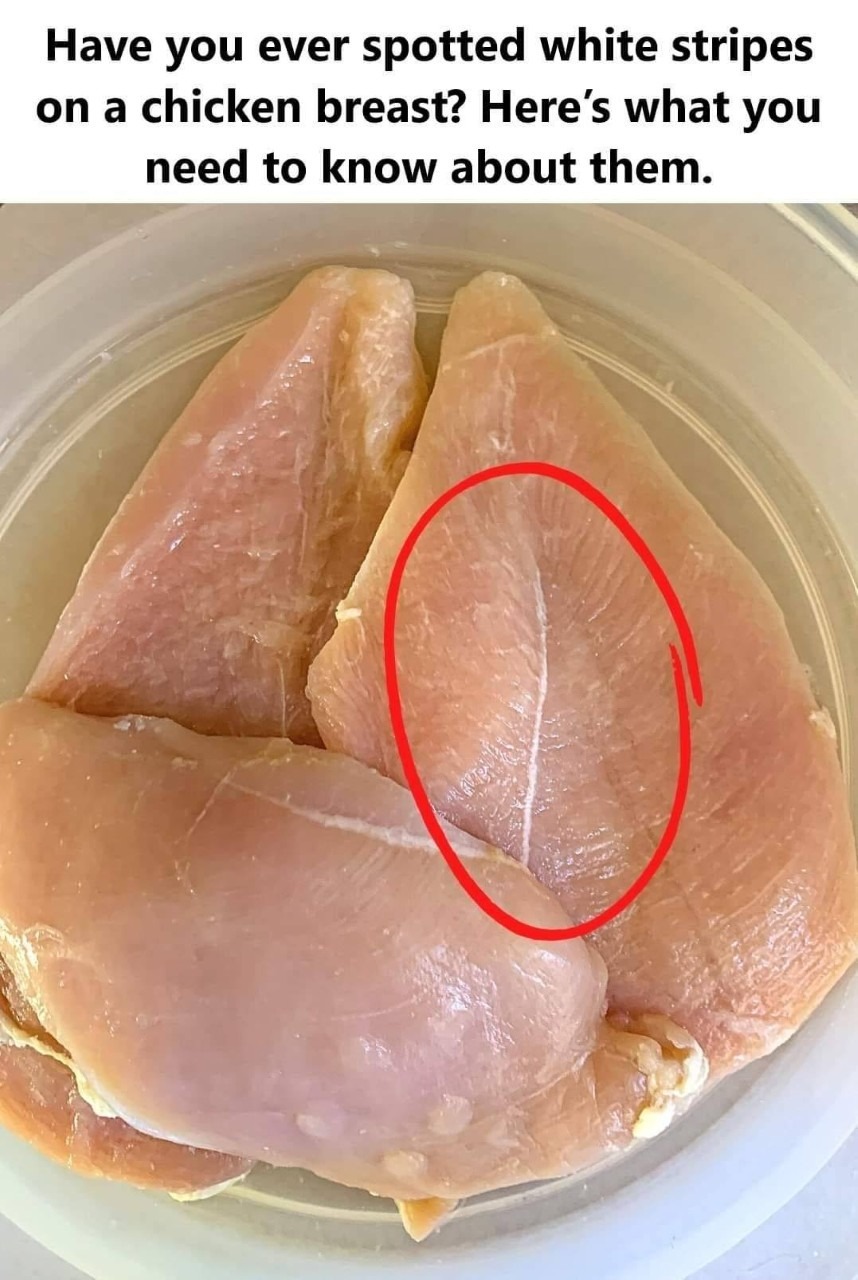
The white stripes on chicken breast are known as **“white striping.”** This is a muscle condition that affects chicken meat, especially larger, commercially raised birds. The stripes appear as white or pale lines running along the direction of the muscle fibers.
Scientifically speaking, white striping occurs when **fat and connective tissue replace muscle fibers** as the chicken grows. Instead of solid muscle tissue, you’re seeing areas where fat has infiltrated the meat.
—
## Is White-Striped Chicken Safe to Eat?
The short answer: **Yes, it is safe to eat.**
White striping does not make chicken unsafe from a food safety standpoint. It does not indicate the presence of harmful bacteria or toxins, and it won’t make you sick if properly cooked.
However, “safe” doesn’t necessarily mean “ideal.”
White striping does impact:
* Nutritional value
* Texture
* Flavor
* Overall meat quality
That’s where the conversation gets more nuanced.
## Why Does White Striping Happen?
White striping is largely a result of **modern poultry farming practices**, especially those designed to meet high consumer demand for lean, inexpensive protein.
### 1. Rapid Growth Rates
Commercial broiler chickens are bred to grow extremely fast—often reaching market size in just **6 to 8 weeks**. Their muscles grow faster than their bodies can fully support, leading to muscle fiber damage and fat infiltration.
### 2. Large Breast Size Selection
Over decades, chickens have been selectively bred for larger breast muscles because that’s what consumers buy most. The downside? Muscle tissue doesn’t always develop healthily at that speed or size.
### 3. Limited Movement
White striping is often found alongside other muscle conditions, such as **woody breast**, which causes the meat to feel unusually hard.
—
## How Common Is White Striping?
Very common.
Studies suggest that **over 50% of commercially produced chicken breasts** show some degree of white striping. The condition is more prevalent in:
* Larger chicken breasts
* Cheaper, mass-produced poultry
* Frozen and bulk-packaged meat
Mild white striping is widespread, while severe cases—where thick white bands dominate the meat—are less common but increasing.
—
## Does White Striping Affect Nutrition?
Yes, and this is where it matters most for health-conscious consumers.
Compared to normal chicken breast, white-striped meat typically contains:
* **More fat**
* **Less protein**
* **More calories**
In some studies, severely white-striped chicken had **up to 200% more fat** than normal breast meat. That undermines one of the main reasons people choose chicken breast in the first place: lean protein.
So while it’s still edible, it’s **nutritionally inferior** to unstriped chicken.
—
## Does It Taste Different?
Many people report that white-striped chicken:
* Feels chewier or tougher
* Has a slightly greasy texture
* Loses moisture during cooking
* Tastes less “clean” or fresh
The fat deposits disrupt the natural muscle fibers, which affects how the meat cooks and retains juices. This is especially noticeable when grilling or pan-searing.
Marinating can help, but it won’t fully restore the texture of high-quality meat.
—
## Is White Striping a Health Concern for Chickens?
Yes—and this is where animal welfare enters the discussion.
White striping is considered a **muscle degeneration disorder**. It indicates that the chicken’s body is under stress due to rapid growth and limited mobility.
While it doesn’t cause immediate suffering in the way injuries do, it reflects broader concerns about:
* Breeding practices
* Living conditions
* Long-term sustainability of poultry farming
For many consumers, this raises ethical questions—not just culinary ones.
—
## How to Identify White Striping at the Store
Before you buy chicken, take a moment to inspect it closely. Look for:
* Thick white lines running parallel to the muscle fibers
* An unusually pale or yellowish appearance
* Very large, thick breasts
Mild striping may be subtle, but severe cases are easy to spot once you know what to look for.
—
## How to Avoid White-Striped Chicken
If you want to minimize your exposure to white striping, here are some practical tips:
### 1. Choose Smaller Chicken Breasts
Oversized breasts are more likely to have muscle abnormalities.
### 2. Buy Organic or Free-Range
These chickens typically grow more slowly and have more space to move, reducing muscle issues.
### 3. Look for “Air-Chilled” Labels
Air-chilled chicken often comes from higher-quality processing and tends to have better texture.
### 4. Buy from Local Farms or Butchers
Small-scale producers usually prioritize quality over rapid growth.
### 5. Consider Alternative Cuts
Thighs, drumsticks, and wings are less affected by white striping and often more flavorful.
—
## What About Frozen Chicken?
Frozen chicken can still have white striping, but it’s harder to spot before cooking. Ice crystals and packaging may hide visual cues.
If texture issues appear after cooking—rubbery, tough, or fatty—white striping could be the culprit.
—
## Can Cooking Methods Make It Better?
While cooking can’t reverse white striping, certain methods help minimize its impact:
* **Slow cooking** keeps the meat moist
* **Marinating** improves tenderness and flavor
* **Braising** helps break down connective tissue
* **Shredding** disguises texture issues in soups or tacos
High-heat, dry cooking methods (like grilling) often make the texture problems more noticeable.
—
## Is White Striping a Sign of Poor Food Regulation?
Not exactly—but it does reflect the **trade-offs of industrial food systems**.
White striping is legal, regulated, and considered acceptable by food safety authorities. However, it highlights how:
* Efficiency can compromise quality
* Consumer demand shapes farming practices
* Cheaper food often comes with hidden costs
It’s not a scandal—it’s a consequence.
—
## Should You Stop Eating Chicken?
Not necessarily.
Chicken remains a valuable source of protein and nutrients. The key is being selective and informed rather than fearful.
Think of white striping as a **quality indicator**, not a danger signal.
—
## The Bigger Picture: What White Stripes Teach Us
Those white stripes are a visual reminder of how modern food is produced. They invite us to ask:
* Where does our food come from?
* How fast should animals grow?
* What trade-offs are we willing to accept for low prices?
For many people, once they notice white striping, they can’t unsee it. And that awareness often leads to better choices—not perfection, just progress.
—
## Final Thoughts
White stripes on chicken breast may look alarming, but they’re not a health hazard. They are a sign of muscle changes caused by rapid growth and modern farming practices. While safe to eat, white-striped chicken is typically lower in protein, higher in fat, and inferior in texture and flavor.
By learning how to recognize and avoid heavily striped meat—and by supporting higher-quality poultry options—you can enjoy better-tasting food while aligning your purchases with your health and values.
The next time you spot those white lines, you’ll know exactly what they mean—and what to do about them.
—
**Word count:** ~1,530
If you’d like, I can:
* Rewrite this for **SEO optimization**
* Make it **shorter and more viral**
* Add a **Q&A or myth-busting section**
* Adapt it for **Facebook, Medium, or food blogs**
Just tell me 👍
