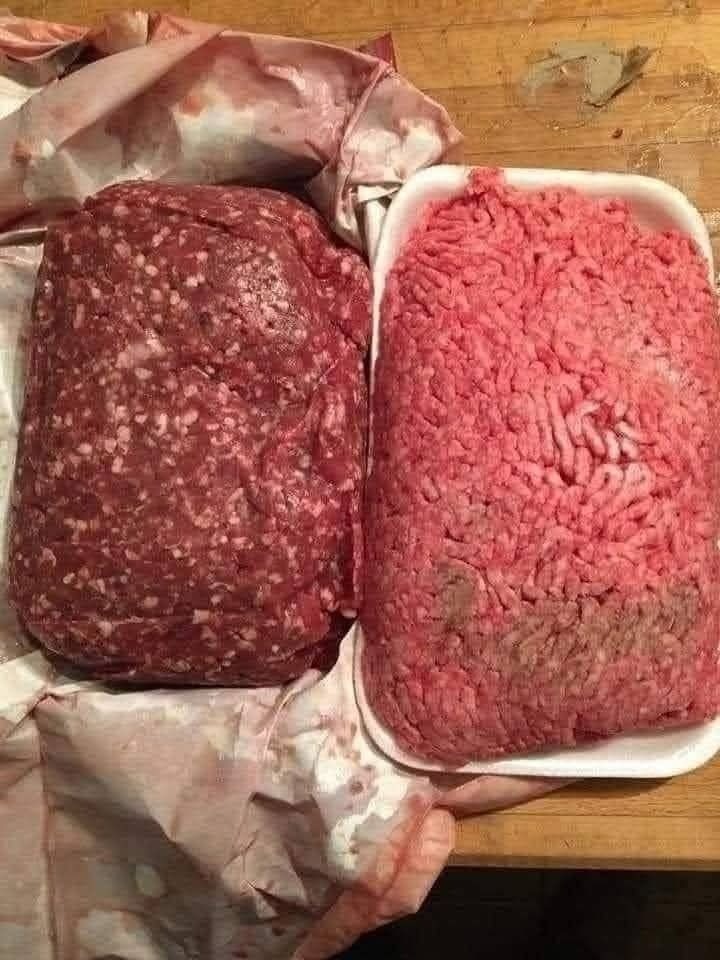
Farm-raised beef generally comes from **small or medium-scale farms**, often sold directly to consumers through farmers’ markets, local butcher shops, or farm-to-table programs.
### Key Characteristics of Farm-Raised Beef
Farm-raised beef focuses on **quality, animal welfare, and sustainability**, rather than maximum efficiency.
—
## 1. Feeding Practices: Grass vs. Grain
One of the most significant differences between store-bought and farm-raised beef is **what the cattle eat**.
### Store-Bought Beef Feeding
Most commercial beef cattle are:
* Started on grass
* Finished on grain (corn and soy) in feedlots
Grain feeding:
However, grain-heavy diets differ significantly from a cow’s natural diet.
### Farm-Raised Beef Feeding
Farm-raised cattle are often:
* Grass-fed for their entire lives
* Pasture-raised with rotational grazing
Grass-fed beef:
* Has a leaner texture
* Tastes more robust or “beefy”
* Contains different fat profiles
**Bottom line:** Diet directly affects flavor, texture, and nutritional content.
## 2. Nutritional Differences
Nutrition is one of the main reasons people seek out farm-raised beef.
### Store-Bought Beef Nutrition
* Higher total fat content
* Higher omega-6 fatty acids
* Consistent nutritional profile
### Farm-Raised Beef Nutrition
Grass-fed and pasture-raised beef often contains:
* Higher omega-3 fatty acids
* More conjugated linoleic acid (CLA)
* Higher levels of vitamin E and antioxidants
* Slightly fewer calories due to lower fat content
While both types provide protein, iron, zinc, and B vitamins, **grass-fed beef offers a more favorable fat balance**.
—
## 3. Use of Antibiotics and Hormones
### Commercial Store-Bought Beef
In large-scale operations:
* Antibiotics may be used to prevent disease in crowded environments
* Growth hormones may be administered to increase efficiency
Regulations ensure that beef sold in stores is safe and free from harmful residue, but some consumers prefer to minimize exposure.
### Farm-Raised Beef
Many small farms:
* Avoid routine antibiotics
* Do not use growth hormones
* Treat animals individually when illness occurs
This approach aligns with consumers seeking more natural production methods.
—
## 4. Animal Welfare Considerations
### Store-Bought Beef Systems
Commercial beef production often involves:
* Feedlots with high animal density
* Limited outdoor movement during finishing stages
* Focus on efficiency and uniformity
While regulations exist, animal welfare varies by operation.
### Farm-Raised Beef Practices
Small farms often emphasize:
* Pasture access
* Natural grazing behavior
* Lower stress environments
Lower stress levels can also affect meat quality, contributing to **better texture and flavor**.
—
## 5. Environmental Impact
### Store-Bought Beef Environmental Footprint
Large-scale beef production:
* Uses significant water and grain resources
* Produces concentrated waste
* Contributes to greenhouse gas emissions
The efficiency of industrial systems can reduce cost, but often increases environmental strain.
### Farm-Raised Beef Environmental Impact
Sustainable farm practices may include:
* Rotational grazing
* Soil regeneration
* Reduced reliance on synthetic fertilizers
Well-managed pasture systems can **improve soil health and biodiversity**, though they require more land.
—
## 6. Flavor and Texture Differences
Taste is subjective, but many people notice a difference.
### Store-Bought Beef Flavor
* Mild, buttery flavor
* Tender due to higher fat content
* Consistent across cuts
### Farm-Raised Beef Flavor
* Richer, more complex beef flavor
* Slightly firmer texture
* Greater variation depending on season and pasture quality
Grass-fed beef benefits from:
* Proper aging
* Slower cooking methods
—
## 7. Processing and Freshness
### Store-Bought Beef Processing
* Often processed weeks before reaching shelves
* Vacuum-sealed and transported long distances
* Shelf life extended through packaging
### Farm-Raised Beef Processing
* Usually processed closer to point of sale
* Often dry-aged or minimally processed
* Shorter time between harvest and consumption
This often translates to **greater freshness and transparency**.
—
## 8. Cost Differences
### Store-Bought Beef
* More affordable
* Economies of scale reduce prices
* Widely accessible
### Farm-Raised Beef
* Higher upfront cost
* Reflects labor-intensive practices
* Supports local farmers directly
While farm-raised beef costs more per pound, many buyers report:
* Eating smaller portions
* Wasting less
* Valuing quality over quantity
—
## 9. Labeling Confusion: What Do the Terms Really Mean?
Understanding labels is crucial.
* **Grass-fed**: Cattle ate grass, but may still be grain-finished unless stated “100% grass-fed”
* **Organic**: Feed must be organic; antibiotics and hormones are restricted
* **Natural**: Minimally regulated; doesn’t guarantee pasture access
* **Farm-raised**: Not a regulated term—ask questions
Local farms often provide **full transparency**, which is harder to verify in large retail systems.
—
## 10. Supporting Local Economies
Buying farm-raised beef:
* Keeps money in local communities
* Supports family farms
* Preserves agricultural traditions
Store-bought beef supports a global supply chain that prioritizes consistency and volume.
—
## Which One Is “Better”?
There’s no one-size-fits-all answer.
**Store-bought beef may be right for you if:**
* Budget is a priority
* Convenience matters
* You value consistent texture and flavor
**Farm-raised beef may be right for you if:**
* You care about animal welfare
* You prioritize nutrition and flavor
* You want transparency and sustainability
The “better” choice depends on your values, lifestyle, and goals.
—
## How to Make Smarter Beef Choices
Regardless of where you buy your beef:
* Choose leaner cuts when possible
* Look for clear labeling
* Ask questions at butcher counters or farmers’ markets
* Cook appropriately for the type of beef you buy
Being informed allows you to align your food choices with what matters most to you.
—
## Final Thoughts
Understanding the real difference between store-bought and farm-raised beef empowers you as a consumer. It’s not just about taste—it’s about **health, ethics, environmental impact, and personal values**.
Neither option is inherently wrong. Store-bought beef provides accessibility and affordability, while farm-raised beef offers transparency, nutritional advantages, and a deeper connection to how food is produced.
The most important step is awareness. When you know where your beef comes from and how it’s raised, every meal becomes a more intentional choice.
And that’s a difference worth understanding.
—
If you’d like, I can also:
* Rewrite this in a **shorter, viral-friendly format**
* Add **comparison charts or infographics**
* Adapt it for **health, sustainability, or food blogs**
* Create a **SEO-optimized version**
Just tell me how you plan to use it!
