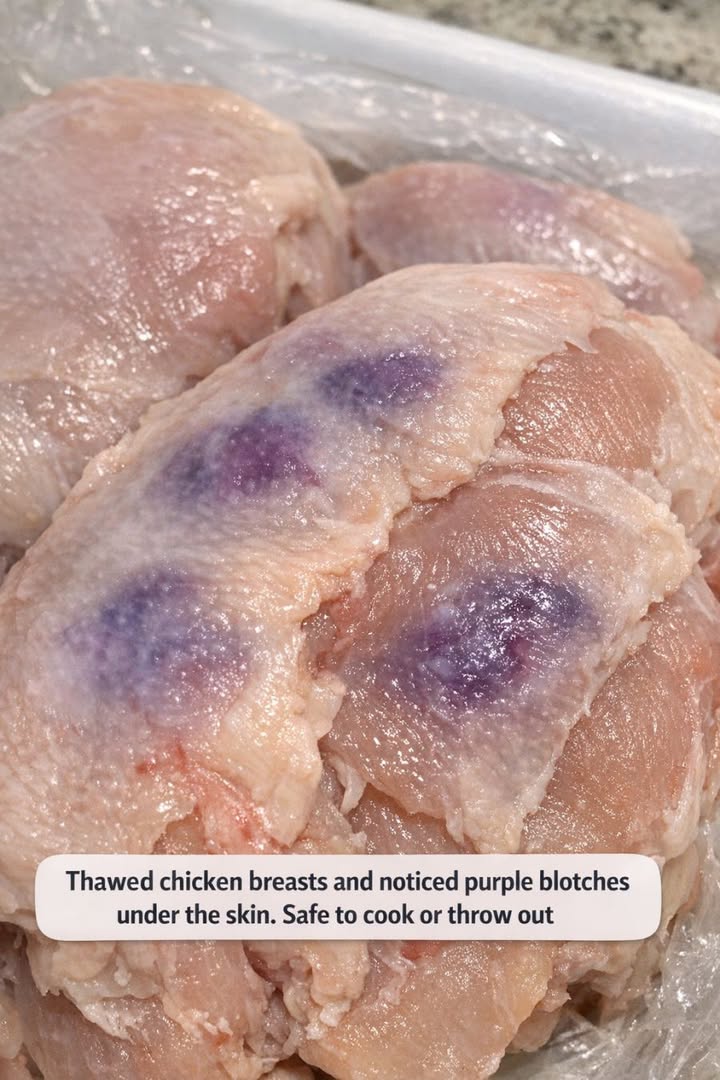
Chicken breasts can develop purple or dark red patches from:
* Broken blood vessels during processing
* Minor bruising while the bird was alive
* Pressure during packaging
When frozen, blood pigments darken. Once thawed, they can look purple, maroon, or even almost black in spots.
**Key sign:**
The meat itself still smells normal and feels firm—not slimy.
**Verdict:**
✅ Safe to cook (you can trim the area if it bothers you)
—
### 2. Myoglobin and Oxygen Exposure
Chicken meat contains **myoglobin**, a protein that stores oxygen. When frozen and thawed:
* Oxygen levels change
* Pigments can darken or shift color
* Areas near bones or thicker muscle may turn purplish
This is especially common in:
**Verdict:**
✅ Safe to cook
—
### 3. Freezer Burn or Partial Dehydration
Freezer burn doesn’t always look white or gray. Sometimes it appears as:
* Dark purplish patches
* Dry, leathery spots under the skin
* Uneven coloring
Freezer burn affects **quality, not safety**.
**Verdict:**
✅ Safe to cook, but texture may be slightly dry
## When Purple Blotches Are a Red Flag
While discoloration alone doesn’t automatically mean danger, there *are* situations where purple or dark spots signal spoilage.
Here’s when you should **throw the chicken out**.
—
### 1. Bad Smell (This One Overrides Everything)
Fresh or safely frozen chicken should smell:
* Neutral
* Mild
* Slightly meaty
If you notice:
* A sour smell
* Rotten egg odor
* Sulfur or ammonia scent
That’s a hard stop.
**Verdict:**
❌ Throw it out
—
### 2. Slimy or Sticky Texture
Some moisture is normal after thawing. **Slime is not**.
Danger signs include:
* Thick, sticky film
* Stringy residue
* Slime that returns after rinsing
Sliminess + discoloration = spoilage.
**Verdict:**
❌ Throw it out
—
### 3. Green, Gray, or Rainbow Sheen
Purple alone can be harmless—but if you see:
* Greenish patches
* Gray, dull meat
* Oily rainbow sheen on the surface
Those are signs of bacterial growth or oxidation.
**Verdict:**
❌ Throw it out
—
### 4. Uncertain Thawing History
Ask yourself:
* Was it thawed at room temperature?
* Did it sit in the fridge more than 2 days after thawing?
* Did it partially thaw and refreeze?
Improper thawing increases bacterial risk, even if the chicken *looks* okay.
**Verdict:**
❌ When in doubt, throw it out
—
## Can Cooking Kill Whatever’s Causing the Purple Color?
Cooking chicken to a safe internal temperature (**165°F / 74°C**) kills harmful bacteria—but it does **not** make spoiled food safe.
Important distinction:
* **Bacteria** → killed by heat
* **Toxins from spoiled meat** → *not* destroyed by cooking
If the chicken is spoiled before cooking, heat won’t save it.
—
## How to Safely Decide: A Quick Checklist
Before cooking chicken with purple blotches, run through this checklist:
✅ No foul odor
✅ Firm, not slimy
✅ Color limited to purple/dark red only
✅ Properly thawed in fridge
✅ Within 1–2 days of thawing
If **all five** are true, the chicken is almost certainly safe.
If **any** are false, toss it.
—
## What About Purple Spots Near the Bone?
This is one of the most misunderstood chicken issues.
Dark or purple coloring near bones is usually caused by:
* Bone marrow pigments
* Young chickens with porous bones
* Freezing causing pigments to seep into meat
This is extremely common in frozen poultry.
**It may look unpleasant, but it is not dangerous.**
You can:
* Cook it normally
* Trim around the area
* Remove skin before cooking if preferred
—
## Does Washing the Chicken Help?
Short answer: **No—and don’t do it.**
Washing raw chicken:
* Does NOT remove bacteria
* Spreads bacteria around your sink and counters
* Does NOT change whether it’s safe
If the chicken is questionable, washing won’t fix it.
—
## How to Prevent This in the Future
To avoid scary surprises next time:
### Freeze Smart
* Freeze chicken as fresh as possible
* Use airtight packaging or freezer bags
* Label with date
### Thaw Safely
* Thaw in the fridge (12–24 hours)
* Never thaw on the counter
* Cook within 48 hours of thawing
### Buy Wisely
* Avoid packages with excessive liquid
* Check sell-by dates
* Choose well-sealed packaging
—
## Frequently Asked Questions
### Is purple chicken always bad?
No. Purple coloration alone—especially under the skin or near bones—is often harmless.
### Can I cut off the purple part and cook the rest?
Yes, **if** the chicken otherwise smells and feels normal.
### Why does frozen chicken look worse than fresh?
Freezing changes pigments, blood distribution, and moisture—making discoloration more visible.
### Should I trust color or smell more?
**Smell, always.** Color can mislead. Smell rarely does.
—
## Final Verdict: Safe to Cook or Throw It Out?
**Safe to cook** if:
* The purple blotches are the only issue
* The chicken smells neutral
* Texture is firm, not slimy
* It was thawed properly
**Throw it out** if:
* There’s a bad odor
* Sliminess is present
* Green, gray, or rainbow colors appear
* You’re unsure how long it’s been thawed
When it comes to chicken, caution is smart—but panic isn’t necessary. Purple blotches are often just an unflattering side effect of freezing, not a sign of danger.
When in doubt, trust your senses—and remember: there will always be another chicken breast. Your health isn’t worth the risk.
—
If you want, I can:
* Rewrite this in a more casual or more scientific tone
* Add SEO keywords and meta description
* Turn it into a shorter FAQ post
* Adapt it for a food safety or cooking website
Just say the word 🍗
