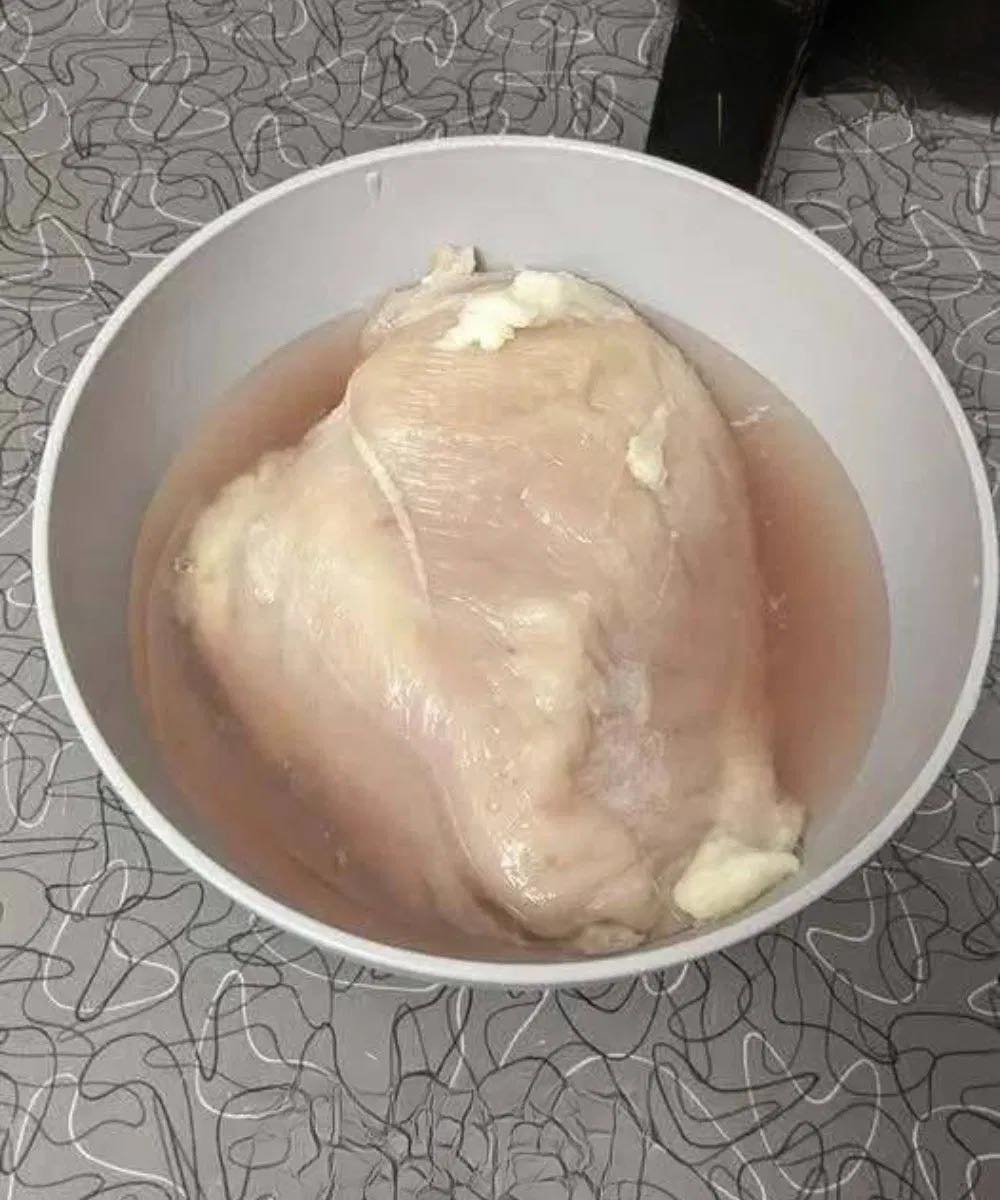
Overnight?
That’s **far beyond the safe window**.
And here’s the most important thing to understand:
—
## The “Danger Zone” Explained (In Plain Language)
Bacteria love certain conditions.
Room-temperature chicken provides all of them.
The **danger zone** for food is between **40°F and 140°F (4°C–60°C)**.
In this range:
* Bacteria multiply rapidly
* Some bacteria double every **20 minutes**
* Toxins can form that **cannot be destroyed by reheating**
After several hours on the counter, chicken can contain **millions of bacteria per bite**—even if it looks perfectly fine.
—
This is where confusion often sets in.
Yes—many people have eaten food left out overnight and didn’t get sick.
That doesn’t mean it was safe.
It means they were **lucky**.
Food poisoning is unpredictable because:
* Bacterial levels vary
* Individual immune systems differ
* Children are more vulnerable than adults
It’s like skipping seatbelts and not crashing—you got away with it, but the risk was still real.
—
Chicken is one of the **highest-risk foods** when it comes to foodborne illness.
It commonly carries:
* **Salmonella**
* **Campylobacter**
* **Clostridium perfringens**
* **Staphylococcus aureus**
Some of these bacteria:
* Grow rapidly at room temperature
* Produce toxins that **heat cannot neutralize**
* Cause severe symptoms in children
That’s why chicken has stricter safety rules than many other foods.
—
## Reheating Does NOT Make It Safe
This is a big misconception.
Reheating chicken that sat out overnight may:
* Kill some bacteria
* **But not the toxins they already produced**
Certain toxins are **heat-stable**, meaning:
* Boiling
* Microwaving
* Frying
…will not make the food safe again.
If toxins are present, eating the chicken can still cause illness—even if it’s steaming hot.
—
## Why Kids Are at Higher Risk
Adults sometimes gamble with food safety.
Kids shouldn’t be part of that gamble.
Children have:
* Weaker immune systems
* Smaller bodies (toxins affect them more)
* Higher risk of dehydration from vomiting/diarrhea
Food poisoning in children can escalate quickly and sometimes requires medical care.
When the question is **“Is it worth the risk?”**, the answer changes when kids are involved.
—
## Common Symptoms of Food Poisoning
If unsafe chicken is eaten, symptoms may include:
* Nausea
* Vomiting
* Diarrhea
* Stomach cramps
* Fever
* Fatigue
Symptoms can appear:
* Within a few hours
* Or up to **48 hours later**
For children, dehydration is the biggest concern.
—
## What Food Safety Experts Agree On
Food safety agencies are unanimous on this point:
> **Cooked chicken left out overnight should be discarded.**
Not smelled.
Not tasted.
Not reheated.
Discarded.
This isn’t about being dramatic—it’s about preventing avoidable illness.
—
## What If the Chicken Was Covered?
Covering chicken:
* Protects from insects
* Does **not** stop bacterial growth
Bacteria don’t care whether the dish has foil or a lid.
Temperature—not exposure—is the issue.
—
## What If the Room Was Cool?
Even in a cool room:
* Counter temperature is still unsafe
* Bacteria still multiply over time
Refrigeration is the only reliable way to slow bacterial growth.
—
## The Cost–Benefit Reality Check
Let’s be honest.
What are you saving by eating that chicken?
* A few dollars
* Some time
* Avoiding food waste guilt
What are you risking?
* Your child’s health
* A night of vomiting
* A doctor visit
* Lost work or school days
When you frame it that way, the answer becomes clearer.
—
## How to Prevent This in the Future (Without Stress)
Nobody’s perfect.
The goal isn’t guilt—it’s better habits.
Here are easy fixes:
### 1. Set a Kitchen Reminder
If dinner runs late, set a phone alarm to put leftovers away.
### 2. Store Food Before Eating
Put food in containers right after cooking, then serve from them.
### 3. Share the Rule Clearly
Make it a household standard: *“If chicken sits out more than 2 hours, we toss it.”*
No debates. No guessing.
—
## How to Handle Disagreements About Food Safety
This issue often becomes emotional because:
* One person relies on experience
* The other relies on caution
A helpful approach:
* Focus on **kids’ safety**
* Emphasize **risk, not blame**
* Use “better safe than sorry” reasoning
It’s not about being right—it’s about protecting health.
—
## What to Do If Someone Already Ate It
If chicken left out overnight was already eaten:
* Monitor for symptoms
* Encourage fluids
* Watch kids closely for dehydration
* Seek medical advice if symptoms appear
Most cases resolve on their own—but early awareness matters.
—
## The Bottom Line
So, is it okay to eat chicken that’s been left out overnight on the counter?
**No.**
Even if:
* It smells fine
* It looks fine
* You’ve done it before
Especially when kids are involved, the safest choice is to **throw it away**.
Food can be replaced.
Health can’t.
Trust your instinct.
When in doubt, toss it out.
Your future self—and your kids’ stomachs—will thank you.
—
**Word count:** ~1,520
If you want, I can:
* Shorten this for **Facebook or Instagram**
* Rewrite it in a **Q&A format**
* Add a **printable food safety checklist**
* Tailor it for **parenting or health blogs**
Just let me know 👇
