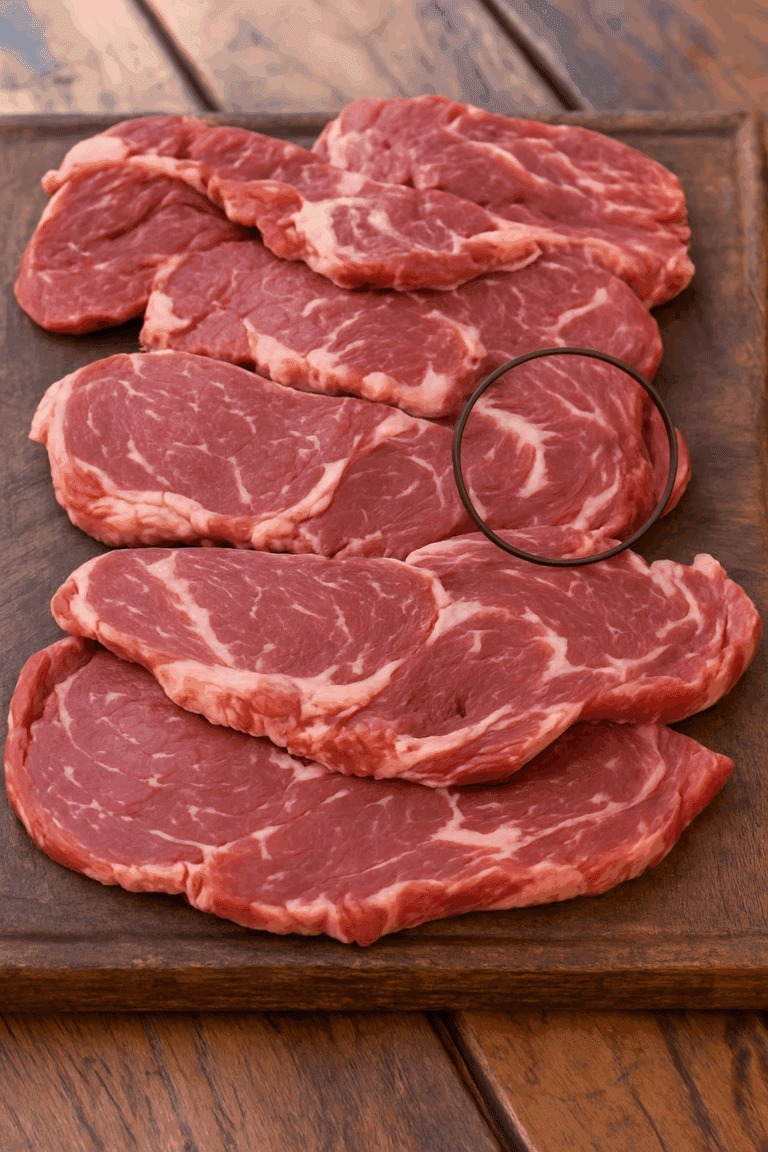
Fresh meat should smell clean and neutral—or slightly metallic in the case of beef. A strong, sour, sulfur-like, or “rotten egg” smell is a clear sign to walk away.
Even if meat looks fine visually, an unpleasant odor usually means bacterial growth has already begun. When in doubt, don’t buy it. No discount is worth the risk.
## 3. Texture: Firm, Not Slimy
Touch matters (when allowed). High-quality meat should feel:
* **Firm and elastic**, not mushy
* **Moist, but not slimy or sticky**
If meat leaves a residue on your fingers or feels slippery, it’s likely past its prime. Sliminess is a common indicator of spoilage, especially in poultry and fish.
—
## 4. Marbling: Flavor Lives in the Fat
Marbling refers to the thin streaks of fat running through the muscle, especially important when buying beef.
* More marbling = more flavor and tenderness
* Even distribution of fat is better than large chunks on the edges
Don’t fear fat—when balanced correctly, it’s what makes meat juicy and satisfying.
—
## 5. Cut and Butchery Quality
A well-cut piece of meat is a sign of skilled butchery and care.
Look for:
* Clean, smooth edges
* Consistent thickness
* No excessive tearing or ragged surfaces
Poorly butchered meat can cook unevenly and lose moisture faster. If possible, buy from a butcher who can explain where the cut comes from and how best to cook it.
## 6. Packaging: What’s Protecting Your Meat?
Packaging plays a huge role in meat quality and shelf life.
* **Vacuum-sealed packaging** preserves freshness longer by limiting oxygen exposure.
* **Overwrapped foam trays** (common in supermarkets) are more prone to leaks and faster spoilage.
* Avoid packages with **excess liquid**, which can indicate older meat or improper storage.
Also, check that the packaging is intact—no tears, loose seals, or bloating.
—
## 7. Labels and Certifications: Read Between the Lines
Meat labels can be confusing, but some are worth paying attention to:
* **Grass-fed / Grass-finished**: Often leaner with a stronger flavor, especially for beef.
* **Free-range / Pasture-raised**: Indicates better living conditions for animals.
* **Organic**: No synthetic hormones or antibiotics; stricter feed standards.
* **No added hormones or antibiotics**: Important for long-term health and peace of mind.
Be cautious of vague marketing terms like “farm fresh” or “natural,” which may not be regulated.
—
## 8. Source: Where Your Meat Comes From Matters
Knowing the source of your meat can tell you a lot about its quality.
Locally sourced meat often:
* Is fresher due to shorter transport times
* Supports local farmers
* Allows more transparency about farming practices
At farmers’ markets or butcher shops, don’t be afraid to ask:
* Where was this animal raised?
* What was it fed?
* How was it processed?
Good sellers are happy to answer.
—
## 9. Ageing: Especially Important for Beef
Ageing improves tenderness and flavor, particularly in beef.
* **Wet-aged beef** is vacuum-sealed and aged in its own juices. It’s common and still flavorful.
* **Dry-aged beef** is aged in controlled environments, creating deeper flavor and tenderness—but at a higher price.
If beef hasn’t been aged at all, it may be tougher. Ask your butcher how long the meat has been aged before sale.
—
## 10. Price: Cheap Meat Often Costs More Later
While price alone doesn’t guarantee quality, extremely cheap meat is usually cheap for a reason—poor feed, poor handling, or low animal welfare standards.
Higher-quality meat:
* Shrinks less during cooking
* Has better texture and flavor
* Often means you need smaller portions to feel satisfied
Think of meat as an investment. Buying better quality, less often, usually beats buying large quantities of low-grade meat.
—
## 11. Storage and Display Conditions
Finally, pay attention to how meat is stored and displayed.
* Meat should be kept cold (just above freezing)
* Displays should be clean and well-lit
* Staff should handle meat with gloves or proper tools
If a store’s meat section looks neglected or smells off, trust your instincts and shop elsewhere.
—
## Bonus Tips for Buying Better Meat
* **Shop earlier in the day** for the freshest selection
* **Build a relationship with a butcher**—they’ll often save the best cuts for regular customers
* **Buy whole cuts and portion at home** to save money
* **Freeze responsibly**: Wrap meat tightly to prevent freezer burn
—
## Final Thoughts
Buying the best quality meat isn’t about being fancy or spending a fortune—it’s about being informed. When you know what to look for, you gain control over taste, nutrition, safety, and value.
By paying attention to color, smell, texture, marbling, sourcing, and storage, you can confidently choose meat that cooks better, tastes better, and aligns with your values.
Next time you’re at the butcher or meat counter, slow down, ask questions, and trust your senses. Your meals—and your body—will thank you.
**Read more on how to choose quality food, cook smarter, and eat better every day.**
—
If you want:
* SEO optimization (keywords, meta description)
* A more casual or more professional tone
* Internal links and a stronger CTA
* Formatting for WordPress or Medium
Just tell me 👍
