—
## **What Is Mold, Really?**
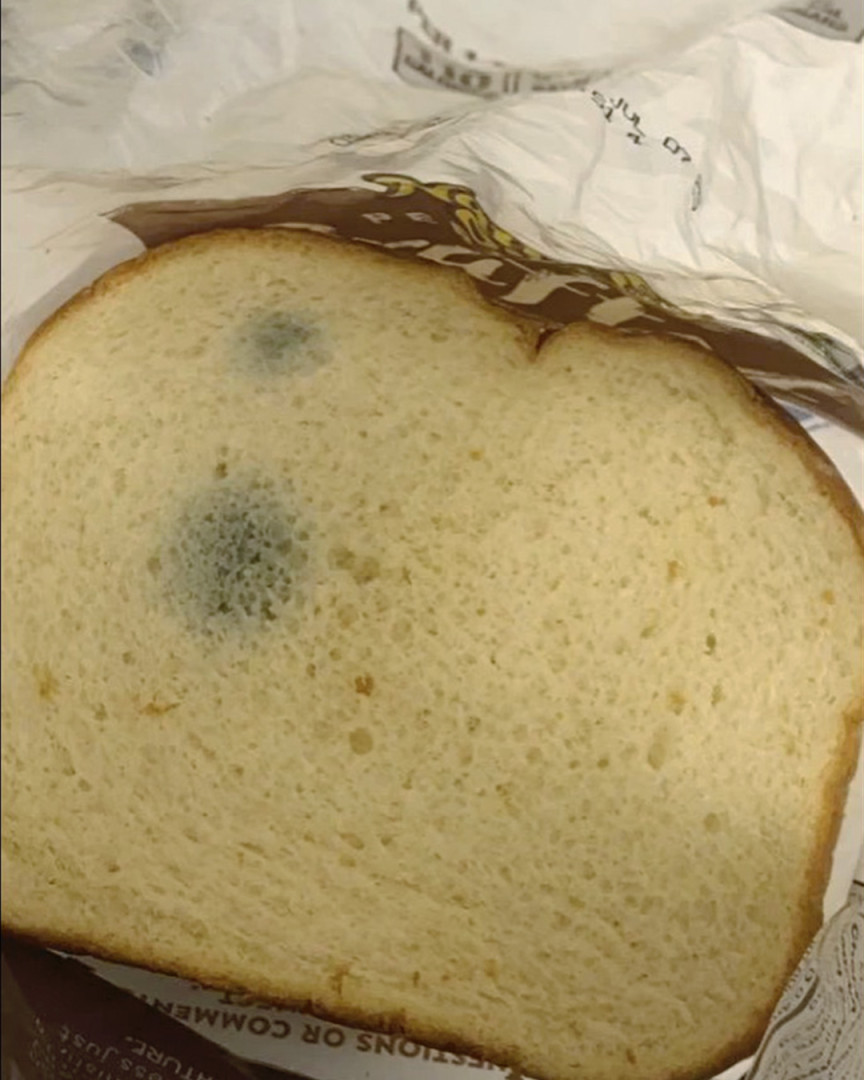
What you see on the surface of moldy bread is only **part of the organism**. The fuzzy spots are just the reproductive structures. Beneath the surface, mold grows **root-like filaments** called *hyphae* that spread invisibly throughout the bread.
This is why moldy bread is different from mold on some hard foods. By the time you see mold, it has often already penetrated much deeper than what’s visible.
—
## **Why Mold Loves Bread So Much**
Bread checks nearly every box mold needs to grow:
* Moisture from baking and storage
* Carbohydrates for food
* Air exposure once the bag is opened
* Room-temperature storage
Even refrigerated bread can grow mold, just more slowly. Once spores land on the surface, growth can begin within days.
And here’s the key point: **mold spreads faster than you think**.
## **The Big Myth: “Just Cut Off the Moldy Part”**
This is probably the most common belief — and one of the most dangerous.
With hard foods like aged cheese or firm vegetables, trimming mold *can* sometimes be safe because the dense structure limits how far mold spreads. Bread, however, is soft and porous.
That means:
* Mold roots can spread several centimeters beyond the visible spot
* Toxins can already be present in areas that look completely fine
* Cutting off one section does *not* remove the contamination
So even if 95% of the bread looks normal, **the entire loaf may already be compromised**.
—
The real concern isn’t just the mold itself — it’s what mold can produce.
### **Mycotoxins: The Hidden Threat**
Some molds produce **mycotoxins**, toxic compounds that can cause serious health problems. These toxins are:
* Invisible
* Tasteless
* Not destroyed by heat or toasting
So toasting moldy bread doesn’t make it safe. Neither does cooking it.
Certain mycotoxins have been linked to:
* Digestive distress
* Immune suppression
* Liver and kidney damage
* Long-term health risks with repeated exposure
You can’t smell or taste mycotoxins, which is why moldy bread is risky even if it “seems fine.”
—
## **What Happens If You Accidentally Eat Moldy Bread?**
If you take one small bite before noticing mold, don’t panic. For most healthy people, **a small accidental exposure won’t cause serious harm**.
Possible short-term symptoms may include:
* Nausea
* Upset stomach
* Mild vomiting
* Diarrhea
However, some people are more sensitive.
### **Who Is at Higher Risk?**
* Children
* Elderly individuals
* Pregnant people
* People with weakened immune systems
* People with mold allergies or asthma
For these groups, even small amounts of mold exposure can cause stronger reactions, including respiratory symptoms or allergic responses.
If someone experiences severe symptoms — persistent vomiting, trouble breathing, or dizziness — medical attention should be sought.
—
## **Can You Ever Safely Eat Moldy Bread?**
To be clear: **no health authority recommends eating moldy bread under any circumstances**.
Even if:
* The mold is small
* The bread smells fine
* You cut off the moldy part
* You toast it
The safest option is always to **discard the entire loaf**.
Bread is inexpensive compared to the potential health risks. This is one case where “waste not, want not” doesn’t apply.
—
## **What About “Good” Mold vs “Bad” Mold?**
You may be thinking: *But some foods are made with mold — like blue cheese!*
That’s true. The difference is **control and intent**.
Foods like:
* Blue cheese
* Brie
* Camembert
* Certain fermented products
Use **specific, food-safe mold strains** grown under controlled conditions. These molds are intentionally added and carefully monitored.
Mold growing randomly on bread is uncontrolled and unpredictable. You have no idea what strain it is or what toxins it might produce.
So while some mold is safe *by design*, moldy bread is not.
—
## **Does Toasting Kill Mold?**
This is another common misconception.
Toasting bread:
* May kill *some* mold spores
* Does **not** eliminate mycotoxins
* Does not reverse contamination
The toxins can remain stable at high temperatures. That means toasted moldy bread can still be harmful even if it looks and smells normal after heating.
Heat does not equal safety when it comes to mold.
—
## **Why Some People Ate Moldy Bread in the Past**
You might wonder how people survived before modern food safety rules.
Historically:
* Mold exposure was common
* Foodborne illness was also common
* Lifespans were shorter
* Many health effects weren’t understood
People often had no choice. Today, we *do* have a choice — and far better scientific understanding. That knowledge allows us to avoid unnecessary risks.
Survival doesn’t equal safety.
—
## **How to Tell If Bread Is Moldy**
Sometimes mold is obvious. Other times, it’s subtle.
Signs include:
* Green, blue, white, or black fuzzy spots
* Powdery patches
* Unusual discoloration
* Musty or earthy smell
If you’re unsure, assume it’s unsafe. Mold can grow internally before becoming visible.
When in doubt, throw it out.
—
## **How to Prevent Bread from Molding Too Quickly**
While you shouldn’t eat moldy bread, you *can* reduce how often it happens.
### **Storage Tips**
* Keep bread in a cool, dry place
* Refrigerate bread to slow mold growth
* Freeze bread if you won’t eat it quickly
* Avoid storing bread near moisture or heat
### **Handling Tips**
* Always use clean hands
* Keep the bread bag sealed
* Don’t return bread to the bag if it’s been exposed to moisture
Freezing is especially effective and doesn’t harm bread quality when thawed properly.
—
## **What to Do If Moldy Bread Touched Other Foods**
Mold spores can spread.
If moldy bread has been in direct contact with:
* Other bread
* Soft fruits
* Soft cheeses
Those foods should be discarded as well. Hard foods may be salvageable, but anything soft and porous is at risk.
—
## **Psychological vs Physical Risk**
Sometimes people eat moldy bread because:
* They don’t want to waste food
* They grew up being told it was fine
* They assume small amounts are harmless
While one accidental bite probably won’t cause serious harm, **repeated exposure increases risk**, especially over time.
Food safety isn’t about fear — it’s about minimizing unnecessary risks when safer options exist.
—
## **So… Can You Eat Moldy Bread?**
Let’s sum it up clearly.
### ❌ You should NOT eat moldy bread if:
* You see mold anywhere on the loaf
* You think cutting it off will help
* You plan to toast or cook it
* You’re pregnant, immunocompromised, elderly, or feeding children
### ✅ The safest action:
* Throw away the entire loaf
* Clean the storage area
* Wash your hands and surfaces
It’s not worth the gamble.
—
## **Final Thoughts**
Moldy bread may look harmless, but what you *can’t* see is what makes it dangerous. The invisible spread of mold and the possibility of mycotoxins turn bread into one of the foods you should never try to salvage.
In a world where food is relatively affordable and accessible, protecting your health is more important than saving a loaf.
So next time you spot that fuzzy patch and hesitate — remember: **when it comes to moldy bread, the answer is always no.**
Throw it out. Your body will thank you.
—
If you’d like, I can also:
* Create a **quick “foods you can vs can’t cut mold off” guide**
* Write a **short viral version for social media**
* Turn this into a **FAQ or infographic-style post**
Just tell me what you need 👇
