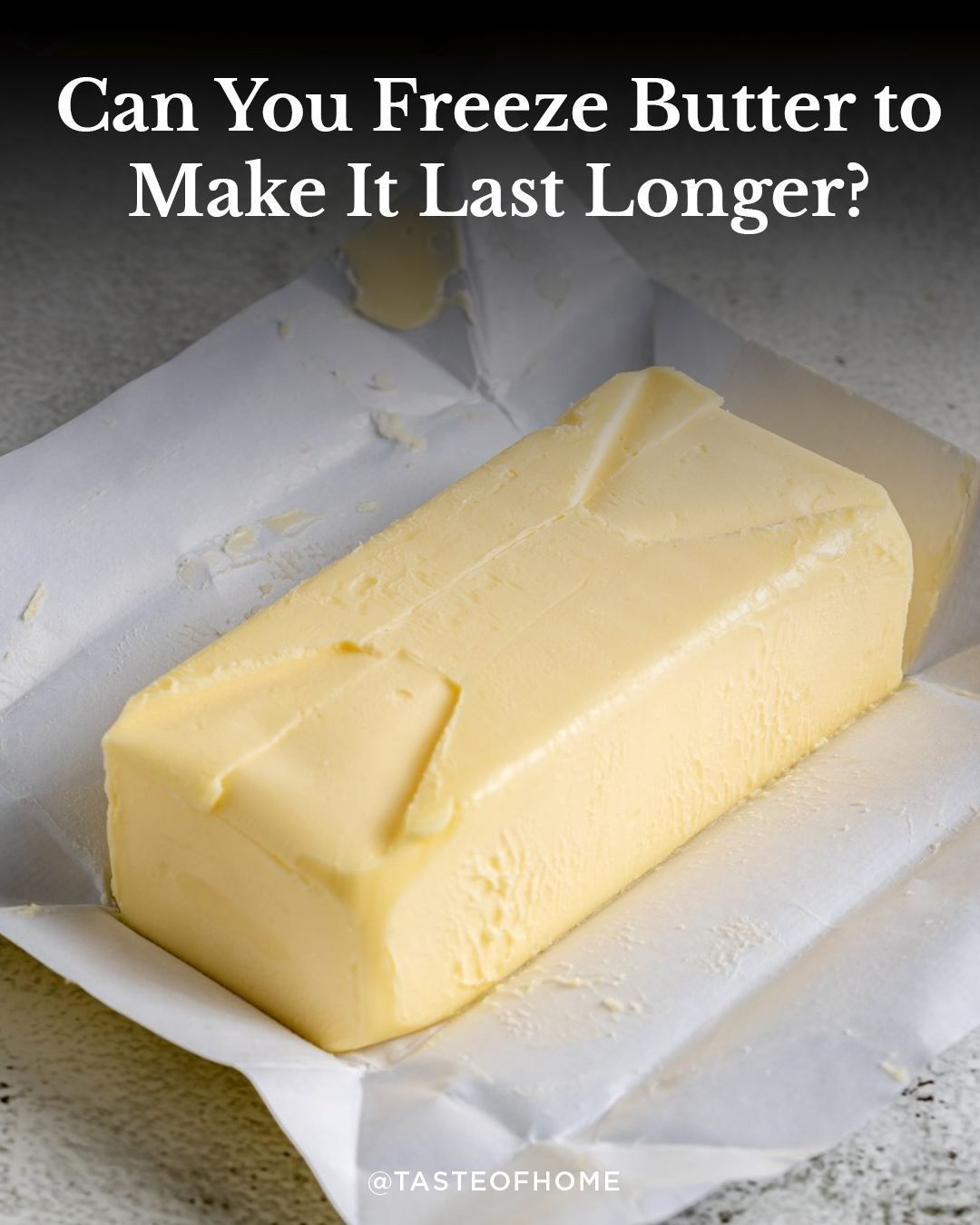
—
## Refrigeration vs. Freezing: What’s the Difference?
* **Salted butter:** up to 3–4 months
* **Unsalted butter:** about 1–2 months
Freezing lowers the temperature dramatically, slowing oxidation and halting microbial activity almost completely.
In the freezer, butter can last:
* **Up to 12 months** (and sometimes longer) without significant quality loss
So yes—freezing butter doesn’t just work, it works *very well*.
—
## Does Freezing Butter Change Its Quality?
This is the biggest concern most people have.
Because it’s mostly fat, butter doesn’t form large ice crystals the way watery foods do. That means:
* Minimal texture change
* No separation
* No loss of structure
Once thawed properly, most people can’t tell the difference between fresh and previously frozen butter—especially when used in cooking or baking.
The only subtle changes you *might* notice:
* A slight loss of aroma over very long freezing periods
* Mild flavor dulling if not wrapped properly
Both are easy to avoid.
—
Butter is low-maintenance, but a few simple steps make all the difference.
### 1. Keep It in Its Original Packaging
Most store-bought butter is already wrapped in foil or waxed paper, which provides decent protection.
For extra security:
* Place the wrapped butter in a freezer-safe bag
* Or wrap it in an additional layer of aluminum foil or plastic wrap
This prevents **freezer burn** and protects against absorbing odors.
### 2. Label and Date It
Butter may last a long time, but it’s still a good habit to label it.
Write:
* The date you froze it
* Whether it’s salted or unsalted
Future you will thank you.
### 3. Freeze in Portions (Optional)
If you rarely use a full stick at once:
* Cut butter into smaller portions
* Wrap each piece individually
* Freeze only what you need
This avoids repeated thawing and refreezing.
—
## Salted vs. Unsalted Butter: Does It Matter?
Yes—and not just for flavor.
### Salted Butter
* Freezes exceptionally well
* Salt helps protect flavor during long storage
* Ideal for long-term freezing
### Unsalted Butter
* Still freezes well
* Slightly more prone to flavor changes over time
* Best used within 6–9 months for peak quality
If you bake often and prefer unsalted butter, freezing is still a great option—just rotate your stock more frequently.
—
## How to Thaw Frozen Butter Safely
Thawing butter is easy, but timing matters.
### Best Method: Refrigerator Thawing
* Move frozen butter to the fridge
* Let it thaw slowly over 6–24 hours
This preserves texture and prevents condensation.
### Quick Thaw Options
* Leave butter on the counter for 30–60 minutes
* Use a microwave *very carefully* on low power (only if you plan to melt it)
### Can You Use Butter Straight From the Freezer?
Absolutely.
Frozen butter is great for:
* Grating into pastry dough
* Making flaky biscuits or pie crusts
* Cooking where it will melt immediately
—
## Can You Refreeze Butter?
Technically, yes—but with caution.
Refreezing butter:
* Is safe from a food safety perspective
* May slightly reduce quality each time
If butter has:
* Been thawed in the refrigerator
* Not left at room temperature too long
* Been handled cleanly
…it can be refrozen once without major issues.
That said, repeated freeze-thaw cycles aren’t ideal.
—
## Does Freezing Butter Affect Baking?
In most cases, **no—and sometimes it helps**.
Frozen or chilled butter is actually preferred for:
* Pie crusts
* Biscuits
* Scones
* Puff pastry
Cold butter creates steam pockets as it melts, producing flaky layers.
For creaming butter and sugar, thaw it fully first to ensure proper texture.
—
## What About Compound Butter?
Herb butters, garlic butter, and flavored butters freeze beautifully.
In fact, freezing compound butter is a smart move:
* Roll into logs
* Wrap tightly
* Slice as needed
They keep their flavor well and are perfect for quick meals.
—
## Common Myths About Freezing Butter
**“Freezing ruins butter.”**
False. Butter is one of the most freezer-friendly foods in your kitchen.
**“Butter absorbs freezer smells permanently.”**
Only if poorly wrapped. Proper packaging solves this.
**“Frozen butter is unsafe.”**
Also false. Butter is very stable when frozen correctly.
—
## When Should You *Not* Freeze Butter?
There are only a few cases where freezing isn’t ideal:
* Butter already close to its expiration date
* Butter that has absorbed strong odors
* Butter that has been left out too long at room temperature
Otherwise, freezing is a perfectly safe and smart option.
—
## Why Freezing Butter Makes Sense
Freezing butter isn’t just about convenience—it’s about efficiency.
It helps you:
* Save money during sales
* Reduce food waste
* Always have butter on hand
* Stay prepared for holidays and baking seasons
In a world where groceries are more expensive and shelf life matters, freezing butter is a simple habit with real benefits.
—
## Final Thoughts: Yes, You Can—and Probably Should
Butter keeps well in the fridge, but freezing butter takes that reliability to another level.
When stored properly, frozen butter maintains its flavor, texture, and usefulness for months. Whether you’re a baker, a home cook, or just someone who likes being prepared, freezing butter is an easy win.
So next time you see butter on sale—or realize you’ve bought too much—don’t panic.
Wrap it.
Freeze it.
And enjoy knowing your future recipes are covered.
Sometimes, the simplest kitchen tricks are the most powerful. 🧈✨
