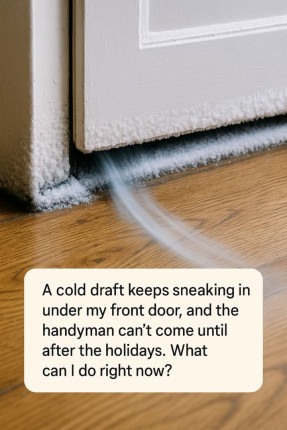
Once you know where the air is coming in, you can choose the best temporary solution.
—
The easiest and fastest fix is a **draft stopper**, also called a door snake.
### Store-bought option
If you can get to a store or order online, draft stoppers are inexpensive and effective. They’re weighted tubes that sit snugly against the bottom of the door, blocking airflow instantly.
### DIY option (no store trip needed)
You can make one right now using items you already have:
* A rolled towel
* A blanket folded lengthwise
* An old sweatshirt or sweater
* A long sock filled with rice, beans, or cat litter
Place it tightly against the base of the door on the inside. This alone can eliminate most of the draft.
**Bonus:** It’s removable, reusable, and leaves no damage.
## 2. Tape the Gap (Yes, Really)
If the draft is coming through a visible crack between the door and the threshold, tape can be surprisingly effective.
### What works best
* Painter’s tape
* Masking tape
* Clear packing tape (temporary, but very effective)
### How to do it
* Clean the area so tape sticks properly
* Tape over the gap where the cold air enters
* Press firmly to seal it
This works especially well for short-term fixes during extreme cold. Just remember to remove it once temperatures rise or before opening the door frequently.
## 3. Lay Down a Rug or Door Mat Inside
Cold air travels along the floor, so blocking it at ground level helps more than you might expect.
* Place a thick rug or mat directly inside the door
* Layer two rugs if needed
* Tuck the edge slightly against the door
This won’t stop the draft entirely, but it reduces the chill and makes the room feel warmer instantly.
—
## 4. Use Temporary Weatherproofing Film or Plastic
If you have plastic wrap, a plastic drop cloth, or even heavy trash bags, you can create a temporary barrier.
### How to do it safely
* Cut plastic slightly larger than the door opening
* Tape it around the door frame on the inside
* Leave enough slack so the door can still open if needed
This method is especially helpful overnight or during extreme cold snaps when you don’t need to use the door frequently.
—
## 5. Adjust the Threshold (If It’s Adjustable)
Some door thresholds have small screws that raise or lower the seal.
If you see screws along the metal strip at the base of the door:
* Use a screwdriver
* Turn screws slightly to raise the threshold
* Test the door to make sure it still opens smoothly
Even a small adjustment can reduce airflow significantly.
If you’re not sure, stop—this is optional and should only be done if it’s clearly adjustable.
—
## 6. Add Extra Insulation With Household Items
When you’re stuck waiting for repairs, creativity helps.
You can use:
* Bubble wrap taped along the bottom edge
* Foam packing material
* Folded cardboard covered with fabric
* Pool noodles cut lengthwise and wedged under the door
These won’t win design awards—but they’ll keep the cold out.
—
## 7. Seal the Outside (If Safe to Do So)
If weather permits and it’s safe to step outside, check the exterior side of the door.
* Look for visible gaps or cracks
* Use temporary caulk or weather-resistant tape
* Place an outdoor mat tightly against the base of the door
This works best when combined with an indoor solution.
—
## 8. Keep Warm Strategically Inside
While blocking the draft is key, you can also reduce how much you feel it.
* Close interior doors to keep warm air contained
* Use a space heater safely in the affected room
* Wear warm socks or slippers indoors
* Rearrange furniture away from drafty areas
Sometimes comfort comes from a combination of fixes rather than a single solution.
—
## What NOT to Do
A few things to avoid:
* Don’t permanently glue or nail anything to the door
* Don’t block emergency exits
* Don’t use candles or open flames near fabric draft blockers
* Don’t ignore moisture buildup if sealing tightly
Temporary solutions should be safe, removable, and breathable.
—
## Planning for the Permanent Fix (After the Holidays)
Once the handyman is available, the long-term solutions usually include:
* Replacing the door sweep
* Installing new weather stripping
* Adjusting or replacing the threshold
* Addressing door alignment or warping
In the meantime, note what worked best—you may want to keep it as a backup for future cold snaps.
—
## Final Thoughts
A cold draft under your front door is annoying, uncomfortable, and frustrating—especially when help isn’t immediately available. But you don’t have to freeze or watch your heating bill climb while you wait.
With towels, tape, rugs, or a simple DIY draft stopper, you can block the cold *today*. These solutions aren’t fancy, but they’re effective, fast, and practical—exactly what you need during the busy holiday season.
Sometimes, the best home fixes aren’t about perfection. They’re about staying warm, comfortable, and sane until the professionals arrive.
