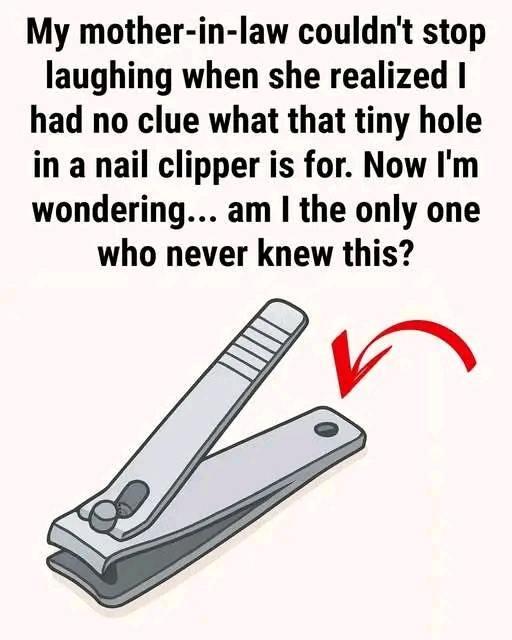
Why Does Your Nail Clipper Have a Little Round Hole?
Have you ever noticed the small round hole at the end of your nail clipper and wondered why it’s there? Most people use nail clippers regularly without giving their design much thought. Yet, like many everyday objects, nail clippers are the result of decades of refinement, engineering decisions, and practical problem-solving.
By the end, you’ll never look at your nail clipper the same way again.
A Brief History of Nail Clippers
To understand the hole, it helps to understand the object itself.
Before Nail Clippers
Before modern nail clippers existed, people used:
Small knives
Scissors
Metal files
These methods were often inefficient, unsafe, or inconvenient. Nail trimming required steady hands and carried a risk of injury.
The Birth of the Modern Nail Clipper
The modern nail clipper design dates back to the late 19th century. In 1875, Valentin Fogerty patented a lever-style nail clipper in the United States. His design introduced the familiar folding lever that increases cutting force through mechanical advantage.
Over time, manufacturers refined the shape, size, and components of the clipper, eventually standardizing features we now consider normal—curved blades, a rotating lever, and yes, a small round hole.
Anatomy of a Nail Clipper
Before diving into the hole specifically, let’s break down the basic parts of a typical nail clipper:
Upper Lever – Provides mechanical leverage
Fulcrum Pin or Rivet – Acts as the pivot point
Body Arms – The two metal pieces that press together
File (optional) – Often attached or integrated
The Little Round Hole – Usually found at the end or near the pivot
Each part serves a purpose, and none are arbitrary.
The Primary Purpose: Attaching a Keychain or Lanyard
Convenience on the Go
The most straightforward explanation for the round hole is portability.
The hole allows you to:
Attach the clipper to a keychain
Hang it from a lanyard
Secure it to a travel kit or grooming bag
Clip it onto a carabiner or hook
This is especially useful for:
Travelers
Campers
Hikers
Military personnel
People who want grooming tools readily available
Many compact or travel-size nail clippers are explicitly marketed with this feature in mind.
Why a Hole Instead of a Hook?
A hole is:
Less likely to snag on fabric
More durable than a protruding hook
Easier to manufacture consistently
Safer (no sharp edges sticking out)
The circular shape distributes stress evenly, reducing the chance of metal fatigue or cracking.
Continue reading…
